



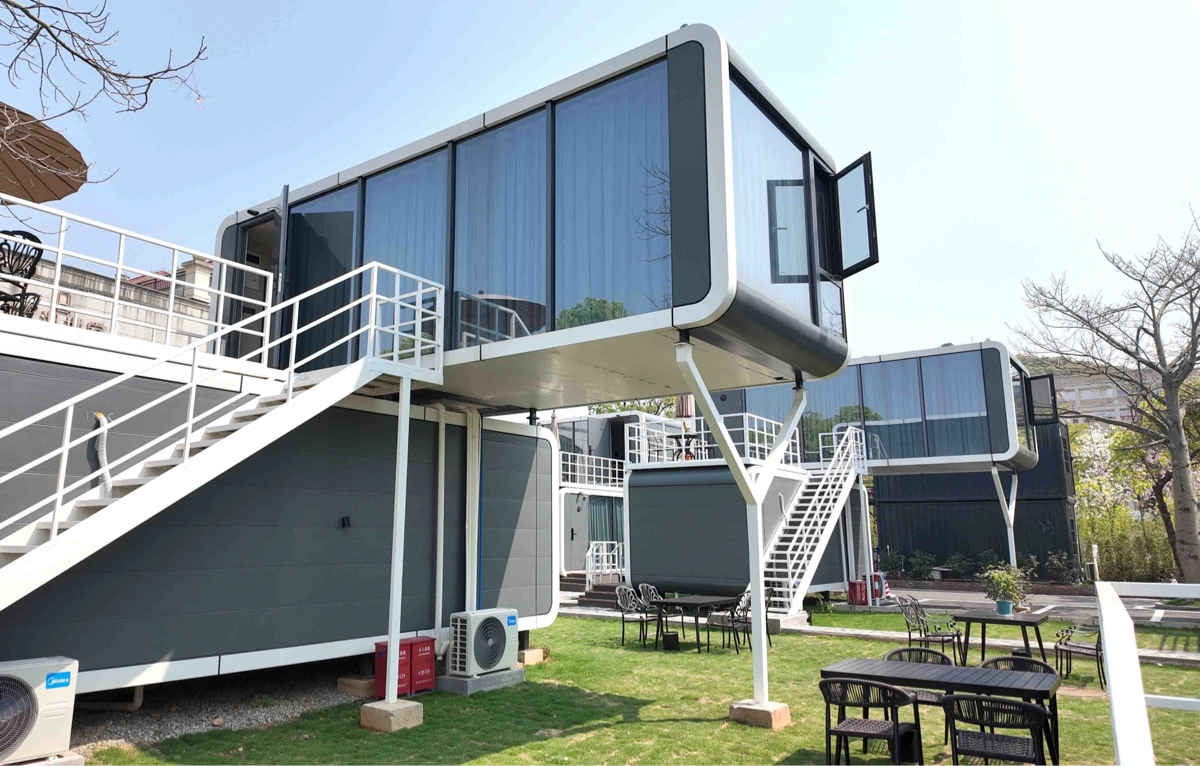
In the lush greenery of Zengcheng, Guangdong, a cluster of sleek, futuristic structures stands elevated on white steel stilts, their floor-to-ceiling glass windows reflecting the sky. These are not spacecraft, but Apple Pods—a new breed of modular, prefabricated buildings that are revolutionizing the hospitality and construction industries.
What Are Apple Pods?
Apple Pods, also known as “space pods,” are a type of relocatable modular building characterized by their distinctive, rounded-cornered design, reminiscent of a smartphone. Constructed from a galvanized steel frame and clad in high-strength aluminum or composite panels, these units are fully prefabricated in factories, with up to 85% of the assembly completed off-site. This allows for rapid deployment, with some projects being fully installed and operational in as little as 48 hours after delivery.
The units are highly customizable, available in standard sizes from 3m to 11.5m in length, and can be stacked or connected to create multi-story complexes. Internally, they are equipped with smart home systems, energy-efficient HVAC, and panoramic windows, offering a level of comfort and aesthetics that rival traditional construction.
Market Dynamics and Growth Drivers
The global market for modular construction is booming, projected to reach USD 129.81 billion by 2031 with a CAGR of 6.05%. Within this, Apple Pods represent a fast-growing niche, driven by several key factors:
- Experiential Tourism: The rise of “glamping” and unique travel experiences has made Apple Pods a highly sought-after accommodation option. Their futuristic design and ability to be placed in scenic, remote locations make them perfect for boutique resorts and campsites. A case in Zengcheng saw occupancy rates reach 90% during peak seasons, driven by social media appeal.
- Speed to Market: In an era where time is money, the ability to deploy a fully functional space in weeks, not months, is a game-changer. This is particularly valuable for pop-up retail, emergency shelters, and workforce housing.
- Sustainability: Factory production reduces construction waste by up to 30% compared to traditional methods. The use of recyclable materials and energy-efficient design aligns with global sustainability goals, making Apple Pods an attractive choice for eco-conscious developers.
- Flexibility: The relocatable nature of these pods means they can be easily moved or repurposed, offering a level of adaptability that fixed structures cannot match. This is ideal for businesses that need to respond to changing market conditions.
Applications Beyond Hospitality
While Apple Pods have made a significant splash in the hospitality sector, their potential extends far beyond:
- Urban Living: As cities grapple with housing shortages, Apple Pods offer a compact, affordable, and stylish solution for micro-living in dense urban environments.
- Commercial Spaces: They are being used as pop-up stores, co-working spaces, and even mobile offices, providing businesses with a flexible and cost-effective way to expand their footprint.
- Public Infrastructure: Governments are increasingly turning to modular solutions for rapid deployment of healthcare clinics, schools, and disaster relief shelters.
The Future of Modular Construction
The future of Apple Pods and modular construction is bright. As technology advances, we can expect to see:
- Increased Integration of Smart Technology: From AI-powered climate control to self-cleaning surfaces, the next generation of pods will be even more intelligent and user-friendly.
- Advanced Materials: The use of carbon fiber, cross-laminated timber (CLT), and other innovative materials will make pods lighter, stronger, and more sustainable.
- Scaling Up: As the industry matures, we will see larger and more complex modular projects, challenging the perception that prefab is only suitable for small-scale applications.
In conclusion, Apple Pods are more than just a passing trend; they represent a fundamental shift in how we think about construction and space utilization. By combining speed, flexibility, and sustainability, these futuristic structures are not just redefining hospitality—they are building the foundation for a more efficient and adaptable world.